
 Deutsch
 Español
 Français
 lingua italiana
 ไทย
 Tiếng Việt
 العربية
 한국어
 Pусский


ELEVATOR VENDING · CUSTOMER COLLECTION
Quick answer: A successful elevator vend does not prove that the pickup door is ready for public use. Before accepting a machine, agree when customers may open the collection door, what happens while it is open, how an uncollected item affects the next order, and who may restore service after a fault. Ask the supplier to demonstrate these states on the ordered configuration using its approved test procedure. Never test a moving door with a hand, defeat a sensor or bypass an interlock.
| Pickup-door acceptance states | Buyer FAQ |
Accept the collection sequence, not just the delivery video
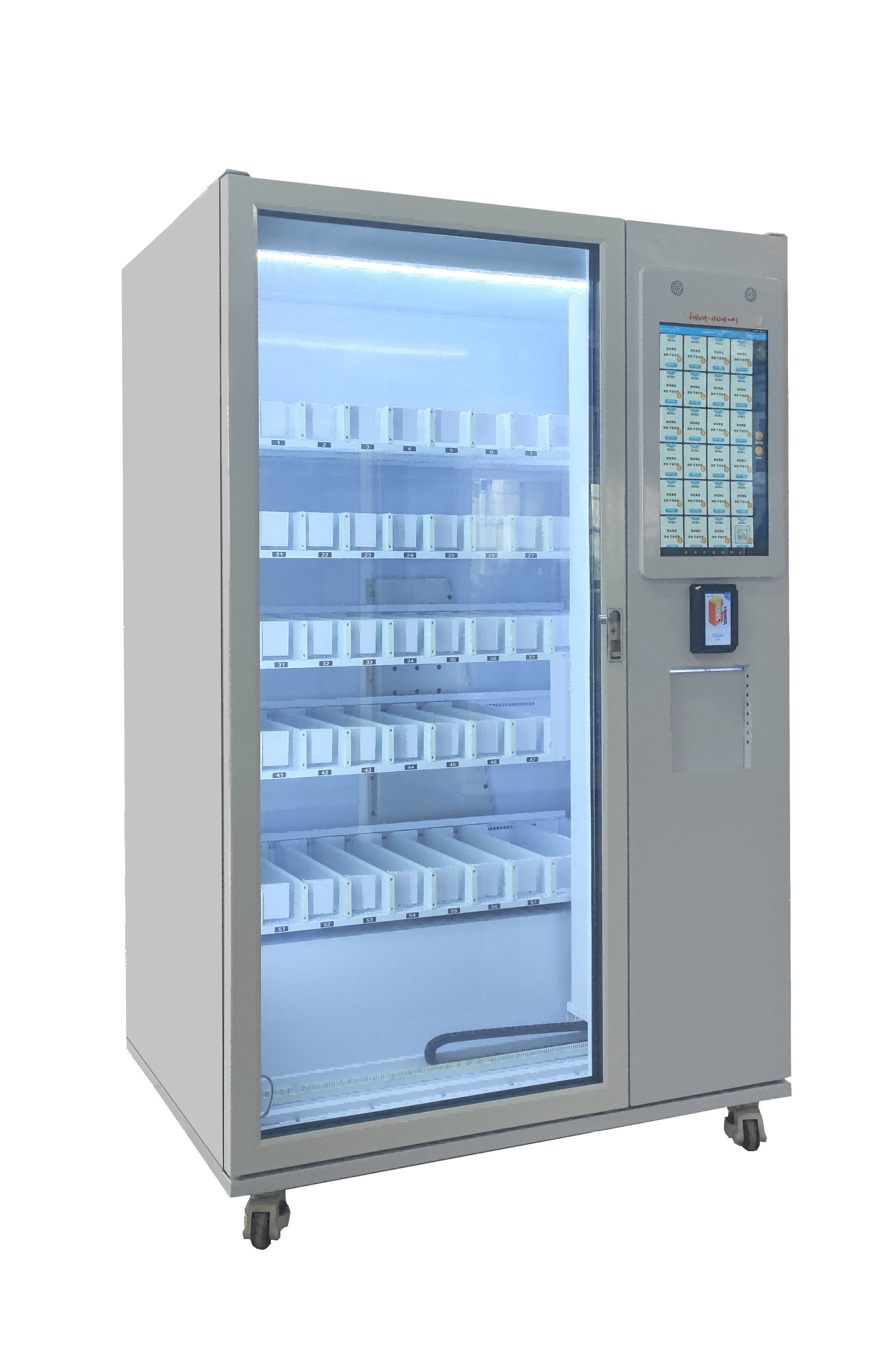
An elevator vending machine can bring an item to a collection position instead of relying on a long drop. The customer still needs to identify the correct opening, wait for permission to collect, remove the product and leave the machine ready for another order. A smooth video of the lift moving answers only part of that sequence.
Define the collection boundary in the purchase specification. Identify the customer pickup door, any internal barrier, the service door and the moving delivery mechanism. These parts do different jobs. An external door being open or closed is not, by itself, evidence that every moving component is in an appropriate state. Ask the supplier to explain the particular design and the controls used in the quoted cabinet.
Micron's existing elevator product material describes a middle-position collection opening with an automatic door on a particular design. That description is useful when discussing the physical collection path. It does not establish the interlock arrangement, sensor coverage or fault recovery of every Micron model. Record the model and fitted options rather than treating “automatic door” as a complete safety specification.
| Observed state | Acceptance point | Evidence to retain |
|---|---|---|
| Waiting for collection | Customer indication and permitted door access match the documented sequence | Continuous demonstration showing screen, pickup opening and item |
| Door open | Movement and the next transaction follow the supplier's specified protective logic | Approved test result and the exact configuration tested |
| Item left behind | The machine handles occupied collection space as documented | Customer message, order outcome and operator response |
| Door not ready or faulted | Public sales and recovery follow the agreed fault procedure | Fault indication, escalation instructions and release criteria |
| Return to service | An authorised person checks the condition before reopening sales | Restoration record and a completed supervised transaction |
Walk through the customer route
Start the demonstration from the ordinary idle screen, with the doors and cabinet in their normal customer-facing condition. Follow one purchase through payment, item transfer, the collection prompt, opening, removal and the return to idle. Keep the relevant screen and pickup opening visible in the same continuous recording wherever possible. A cut between delivery and collection can conceal an unresolved timing or access problem.
Check that the instructions distinguish waiting from collecting. The indication should correspond to the physical opening the customer uses. If there are several doors or compartments, the screen and labels must make the intended collection point clear. Confirm the language used at the destination site, including the message displayed when collection is unavailable.
Use representative products to evaluate removal as well as delivery. A tray that reaches the bay may still be difficult to grasp, while a tall package may obscure the opening or catch during collection. Ask the supplier to demonstrate the intended handling with the actual packaging. Do not infer a universal maximum size, weight or reach requirement from a photograph.
Agree a protected test for the open-door state
A buyer should receive an explanation of how customer access and mechanism movement are coordinated. Depending on the design, this may involve physical barriers, door-state sensing, locks, interlocks or other protective measures. A named feature on a quotation does not show how it behaves throughout the complete operating sequence.
Have the supplier define the expected behaviour while the pickup door is open and the method used to demonstrate it. Where a test involves an obstruction or a protective device, it must be planned and carried out by qualified personnel using the manufacturer's approved equipment and procedure. Keep customers away during such demonstrations. Never insert fingers, a body part or an improvised object into a moving mechanism, hold a sensor in a false state or remove a guard to force a result.
Retain a result for the exact cabinet and relevant software configuration. A vendor's general safety article, a component certificate or another customer's machine is useful background, but it does not replace evidence for the system supplied. Obtain the applicable operating and safety documentation for the destination market without presenting this article as a compliance certificate.
Separate an uncollected item from a completed pickup
Payment approval, arrival at the pickup position and customer removal are different events. Ask which of them the machine actually detects and which it infers from a timer or another signal. The operator should understand what a “successful” transaction record proves before using it to settle a customer complaint.
Agree a demonstration in which an item remains in the collection space under the supplier's controlled procedure. Establish the documented next-order behaviour, the customer message and the operator's response. Do not assume that another sale is always blocked, that the item is automatically recovered or that the customer is automatically refunded. Those outcomes depend on the particular system and commercial workflow.
Include the contact route for a customer who cannot collect an item. The report should identify the machine, time and order where available, product and observed message. Store only information needed to investigate. Staff should be able to distinguish a collection-access problem from payment rejection or a product that never reached the bay.
Define recovery before the first public sale
A pickup-door fault should have an owner and a documented response. Specify how the operator recognises the condition, prevents further customer exposure where required, contacts support and records the incident. A screen returning to its home page is not sufficient evidence that a mechanical or access fault has been resolved.
Separate customer instructions from service instructions. Customers should not be asked to push a jammed door, reach past a barrier or pull a trapped package from the delivery mechanism. Restrict service access to the people authorised and trained for that task. Electrical isolation, mechanical access and other service actions must follow the supplied procedure; this buying guide is not a repair manual.
If a restart forms part of the approved recovery procedure, agree what happens to the affected order and any item still inside before carrying it out. After restoration, the authorised person should confirm the relevant door state, clear collection space and correct customer message, then complete the agreed supervised transaction before public sales resume. Keep the fault record even if the subsequent test succeeds.
Put the door sequence in the handover record
The handover package should connect the machine identifier and fitted door arrangement to the accepted operating sequence, messages, fault response and training. Record the test date, software version where available, representative products, witness, discrepancies and person responsible for each correction. An open discrepancy needs a clear resolution before acceptance.
Keep a copy available to the site operator, not only the purchasing team. Revisit the affected acceptance cases after changes to the pickup-door hardware, protective controls, delivery software or product packaging. A test passed on an earlier configuration should not silently stand in for a modified machine.
Preparing an elevator vending specification? Send Micron the intended products, packaging and collection workflow when you request a configuration review. Ask for a model-specific pickup-door demonstration alongside the maintenance and operator handover plan. Confirm the protective measures and documentation for the exact order.
Buyer FAQ
1. Does elevator delivery prove the pickup door is safe?
No. Delivery and customer access are separate parts of the sequence. Obtain model-specific evidence for both.
2. Does an automatic door always include the same interlock?
No. Ask which controls and physical barriers are fitted and how they coordinate access and movement.
3. Should I check a closing door with my hand?
No. Protective-device tests belong to qualified personnel following the manufacturer's approved procedure and using approved test equipment.
4. Which product samples should be used for pickup testing?
Use the intended packaging and representative difficult-to-handle items agreed with the supplier. Test removal from the collection position as well as delivery.
5. Is a recorded successful vend proof that the customer removed the item?
Only if the documented system actually establishes removal. Ask what event the transaction status represents.
6. Must an uncollected item block the next sale?
Do not assume a universal response. Obtain and demonstrate the designed occupied-bay behaviour for the proposed system.
7. Does a door fault always trigger an automatic refund?
No universal refund behaviour is claimed. Agree the order investigation and financial resolution separately from the physical recovery procedure.
8. Who should clear a trapped product?
Only authorised, trained personnel following the supplied service procedure. Customers should use the displayed support route.
9. Is restarting the machine enough to approve return to service?
No. Follow the approved recovery checks and supervised transaction, and retain the original fault record.
10. Does this checklist certify compliance?
No. It is a buyer handover framework. Obtain the applicable documentation and professional assessment for the exact machine and destination market.
References
- Vendekin: elevator vending machine safety — industry discussion of protective layers; its product claims do not establish Micron capabilities.
- WEIMI: elevator vending machine buyer guide — company background on product fit and the complete delivery path.
- Micron elevator snack and drink machine — discuss the offered collection arrangement and options with the supplier.


